
Tropical Depression ‘Caloy’ Approaching Philippines
CALOY – The Philippine Atmospheric, Geophysical and Astronomical Services Administration (PAGASA) reported that a tropical depression may enter the Philippine Area of Responsibility (PAR) next week.
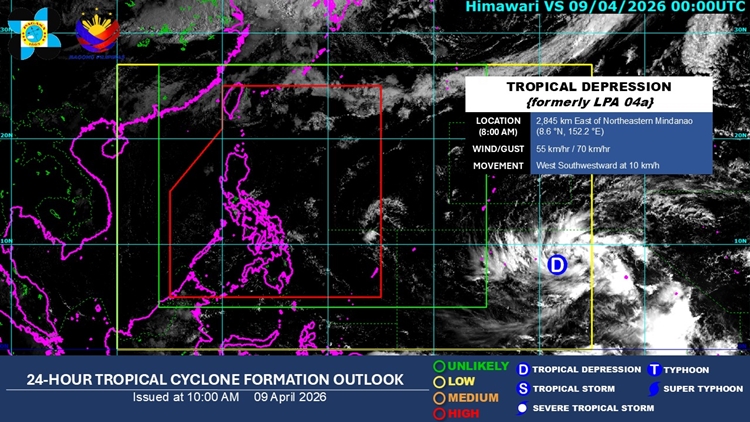
As of April 9, the storm was located about 2,845 kilometers east of Northeastern Mindanao. It is moving slowly westward, with sustained winds of 55 kilometers per hour and gusts up to 70 kph.
Forecasters say that while the storm is expected to enter the country, the chances of it making landfall are currently low. Once it enters the PAR, the tropical depression will be named “Caloy.” PAGASA also noted that its path and intensity remain uncertain and could strengthen before affecting the country.
Meanwhile, a ridge of high pressure over Northern and Central Luzon continues to influence the weather, bringing mostly hot but clear conditions across much of the country on Thursday, coinciding with the observance of Araw ng Kagitingan. Despite the generally fair weather, Metro Manila and other areas may still experience scattered rain showers, thunderstorms, and lightning, particularly in the afternoon and evening due to localized storm activity.
PAGASA emphasizes that residents should remain alert as weather conditions can change quickly, especially with the potential approach of the storm. Those living in vulnerable areas are advised to monitor updates and prepare accordingly, even though the likelihood of landfall remains low. Local authorities and communities are also encouraged to stay ready for any sudden weather changes, particularly heavy rain or strong winds that could affect transportation, outdoor activities, and public safety.

PAGASA, the Philippine Atmospheric, Geophysical and Astronomical Services Administration, is the government agency responsible for weather forecasting, monitoring typhoons, issuing warnings, and studying climate and astronomical events in the Philippines. It provides vital information to help communities prepare for natural hazards and ensure public safety.