
Trump Brings Up Pearl Harbor in Talks About Iran
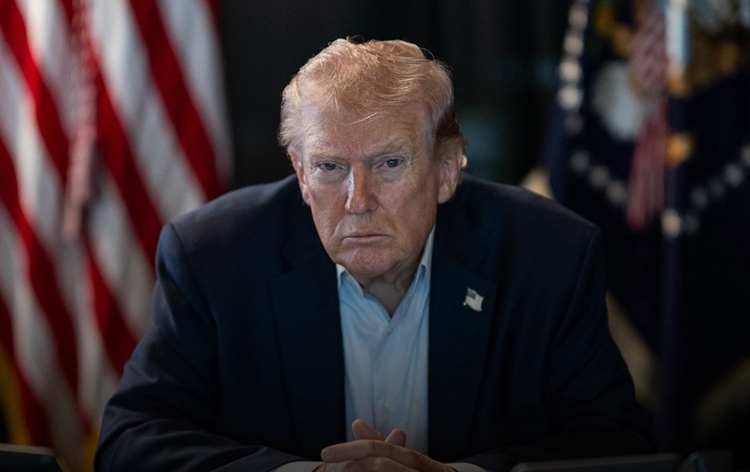
U.S. President Donald Trump compared the recent U.S. strikes on Iran to Japan’s surprise attack on Pearl Harbor in 1941 during a March 19 meeting in Washington with Japanese Prime Minister Sanae Takaichi.
When asked why he had not informed allies about the planned military actions, he explained that keeping it a surprise was important. He jokingly said that Japan knew best about surprises and asked why Japan had not warned the U.S. about Pearl Harbor. While meant as a joke, his words reminded many of one of the deadliest surprise attacks in American history.
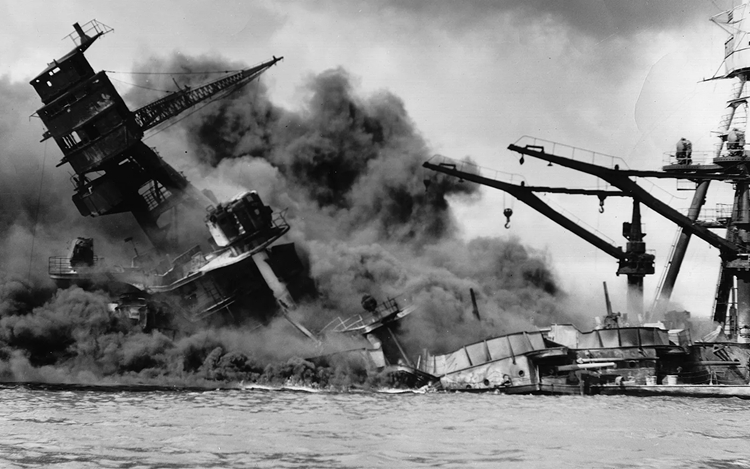
The attack on Pearl Harbor occurred on December 7, 1941, when Japan suddenly struck the U.S. Pacific Fleet in Oahu, Hawaii. At that time, the United States was neutral in World War II. Japanese planes, launched from six aircraft carriers, attacked in two waves, targeting battleships, cruisers, destroyers, and airfields. Of the eight battleships in the harbor, four were sunk, and the others were damaged. Over 180 U.S. planes were destroyed, and key facilities were severely damaged. The attack killed 2,403 Americans, including sailors, soldiers, Marines, and civilians, and injured more than 1,100 others.
The attack was planned as a quick strike to prevent the U.S. Pacific Fleet from interfering with Japan’s expansion in Southeast Asia. Although the three U.S. aircraft carriers were not in the harbor and survived, the damage shocked the nation. Japan declared war on the U.S. and the British Empire the next day, bringing both countries into World War II. Germany and Italy soon declared war on the U.S., and President Franklin D. Roosevelt famously called December 7 “a date which will live in infamy.”
The events at Pearl Harbor demonstrate how dangerous surprise attacks can be and why preparedness is crucial. Trump’s comments, though made lightly, reminded people that sudden military actions can have serious and lasting consequences.